

To get a fully funded scholarship in 2026, identify programmes that match your academic level and field, prepare all required documents early, write a tailored personal statement that shows why you specifically are the right fit, secure strong references, and submit before the deadline. Strong candidates combine academic performance with real leadership experience and a clear sense of what they plan to do after the programme ends.
What Is a Fully Funded Scholarship?
A fully funded scholarship is a financial award that covers every major cost associated with studying abroad — leaving you with no out-of-pocket expenses for the duration of your programme. It is different from a tuition waiver, a bursary, or a partial grant in one important way: you should be able to accept it and go study without needing to find additional money from anywhere else.
That said, the exact scope of what counts as "fully funded" varies between programmes. Reading the official programme details carefully — rather than relying on a third-party summary — is the only way to know exactly what is and is not covered before you apply. Official sources like the Chevening website, the Fulbright Foreign Student Program, and the DAAD scholarship portal publish full breakdowns of what their awards include.
What Expenses Does a Fully Funded Scholarship Cover?
Most fully funded scholarships cover some combination of the following:
| Expense Category | Typically Included | Notes |
|---|---|---|
| Tuition fees | ✅ Almost always | Paid directly to the institution |
| Monthly living stipend | ✅ Very common | Amount varies by country and programme |
| Return airfare | ✅ Common | Economy class to/from home country |
| Health insurance | ✅ Common | Sometimes requires top-up for dependants |
| Accommodation | ⚠️ Sometimes | Often covered via stipend rather than directly |
| Visa and application fees | ⚠️ Some programmes | Worth checking before applying |
| Research and fieldwork costs | ⚠️ PhD only usually | Varies widely by discipline |
| Family allowances | ❌ Rarely | A few programmes include spouse/child support |
Fully Funded vs Partially Funded Scholarships
The difference between a fully funded and a partially funded scholarship is straightforward in principle but can be surprisingly unclear in practice. Some programmes marketed as "fully funded" cover only tuition, leaving you to fund living expenses yourself. Others that describe themselves as partial awards actually include a stipend large enough to cover most of your costs comfortably.
The rule of thumb: if a programme's official page does not explicitly state that it covers tuition and living costs and travel, treat it as partially funded until you have confirmation in writing. Partially funded awards can still be very valuable — many students combine them with other grants, assistantships, or part-time work — but they require planning that a genuinely fully funded scholarship does not.
Types of Fully Funded Scholarships Available in 2026
Fully funded scholarships come from several different sources, and knowing the difference matters because each source has its own selection criteria, values, and application process. Approaching a government scholarship the same way you would a university scholarship is a common mistake that costs applicants otherwise strong applications.
Government-Funded Scholarships
These are the most prestigious and typically the most competitive. They are funded by national governments as instruments of diplomacy and soft power, designed to build lasting connections between the awardee's home country and the funding country. The UK's Chevening, the USA's Fulbright, Germany's DAAD, Japan's MEXT, and Australia's Australia Awards are all government scholarships. They generally look for future leaders with a clear plan to return home and contribute — not just excellent students. If you are applying to one of these, your professional goals and community impact will carry as much weight as your academic record.
University Scholarships
Many universities — particularly in the UK, USA, Canada, and the Netherlands — offer their own fully funded awards to attract exceptional international students. These range from full fee waivers with stipends at research universities to specific departmental fellowships for PhD candidates. University scholarships tend to be more academically focused than government ones, with less emphasis on community leadership and more on research potential or academic achievement. The Gates Cambridge Scholarship and the Oxford-Weidenfeld and Hoffmann Scholarships are well-known examples.
If your academic grades are your strongest credential, university-based scholarships may suit you better than government programmes. Read our article on how Nigerian First Class degrees are interpreted internationally to understand how UK and US universities actually read your transcript before you apply.
Private Foundation and NGO Scholarships
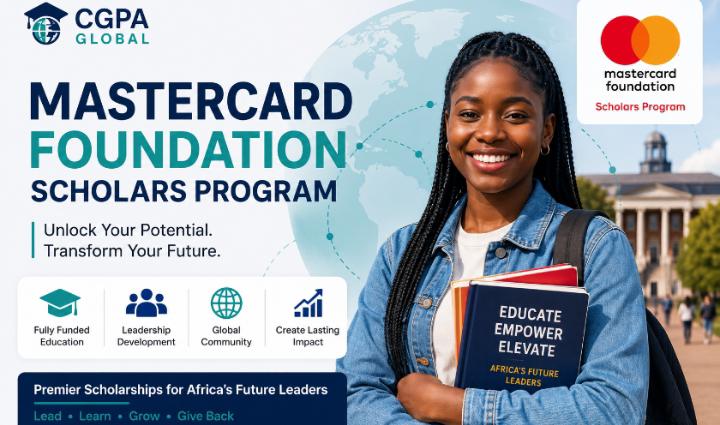
Private foundations and non-governmental organisations fund scholarships with specific social missions. The Mastercard Foundation Scholars Program — one of the most generous scholarship programmes in the world for African students — funds undergraduates and postgraduates at partner universities with a specific focus on students from economically disadvantaged backgrounds who demonstrate exceptional potential and commitment to giving back. We have a detailed breakdown of what the Mastercard Foundation selection process actually involves and what the committee is genuinely looking for.
Other well-known foundation scholarships include the Aga Khan Foundation International Scholarship, the Ford Foundation International Fellowships, and the Open Society Foundations scholarships. These typically require alignment with the foundation's specific values and priorities.
Country-Specific Scholarship Programs
Some scholarships target students from specific countries or regions. The Erasmus Mundus Joint Master Degrees, for example, are open to students globally but have quotas for students from partner countries. The Commonwealth Scholarship Commission awards scholarships specifically to students from Commonwealth member states. China's CSC Scholarship, Korea's GKS, and Turkey's Türkiye Scholarships all have country-specific eligibility criteria. If you are from Nigeria, Ghana, Kenya, India, or other countries with significant diaspora interest in international study, there are often country-to-country bilateral scholarship programmes that receive far fewer applications than the global ones — worth researching through your country's education ministry.
Eligibility Requirements for Fully Funded Scholarships
Eligibility requirements exist to filter applications before they reach reviewers. Failing to meet any single hard requirement means your application will be rejected regardless of how compelling everything else is. Before spending any time on an application, run through the eligibility criteria line by line and confirm — not assume — that you meet all of them.
Academic Requirements
Most fully funded scholarships specify a minimum academic standard, usually expressed as a degree classification or GPA. Understanding what your grade means in the scholarship's home system is therefore essential. A Nigerian student with a Second Class Upper (2:1) may meet the academic threshold for most UK programmes — because the Nigerian classification system is derived from the UK's — but the same grade needs to be clearly communicated in US applications where the GPA scale operates differently. If you have not already, use our CGPA converter tool to see exactly where your grade places you in the target country's system.
For context: based on Chevening's published guidance, which the programme makes available on its official website, applicants are expected to hold or achieve an undergraduate degree that would normally be equivalent to an upper second class honours from a UK university. This means different things in different countries' grading systems, and understanding that equivalency before applying is your responsibility — not the scholarship's. The same applies to Fulbright: the Fulbright Foreign Student Program sets its own academic requirements by country, which are published on the relevant bi-national commission's website.
English Language Requirements (IELTS/TOEFL)
For scholarships at English-medium institutions, a language proficiency test score is typically required unless your previous education was conducted entirely in English. The most commonly accepted tests are IELTS (Academic) and TOEFL iBT. Chevening, based on information published on its official website, accepts IELTS, TOEFL, Cambridge C1 Advanced, and several other recognised qualifications. Fulbright requirements vary by country — check your specific bi-national Fulbright Commission's published requirements.
Typical minimum scores for competitive programmes range from IELTS 6.5 to 7.5 overall, with no component below 6.0 or 6.5. If your score is at the minimum threshold, it will not hurt you — but a score well above the minimum demonstrates something useful: that you can function comfortably in an academic environment where everything is conducted in English, including seminars, examinations, and written assignments.
Leadership and Extracurricular Activities
Government scholarships in particular place significant weight on demonstrated leadership experience. This does not mean you need an impressive job title. It means you need to be able to describe — with specifics, dates, and outcomes — situations where you took initiative, organised people, or created something meaningful. A student who started a study group that improved pass rates in their department is demonstrating leadership. A graduate who organised community health screenings is demonstrating leadership. Breadth matters less than depth and evidence of real impact.
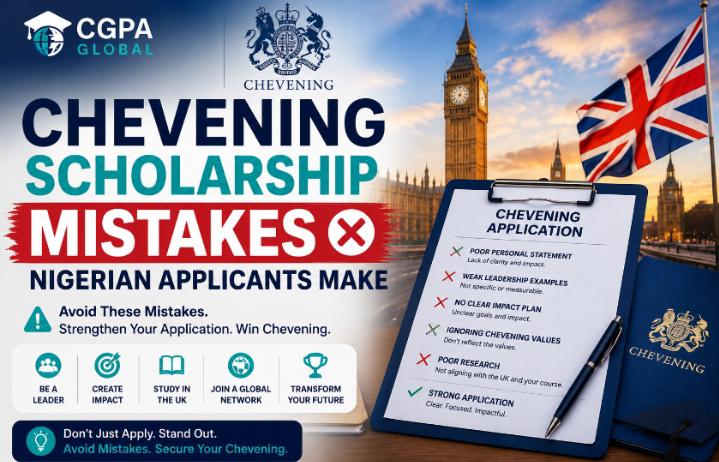
We have an in-depth guide on the most common Chevening application mistakes, including how applicants typically mishandle the networking and leadership sections of that particular application — worth reading before you start.
Financial Need vs Merit-Based Scholarships
Some fully funded scholarships are purely merit-based — awarded to the strongest applicants regardless of financial background. Others, like the Mastercard Foundation Scholars Program, explicitly prioritise students from economically disadvantaged backgrounds and treat financial need as a central eligibility criterion, not an optional consideration. Some programmes combine both: they look for academic excellence first, then financial need as a tiebreaker.
Know which category the scholarship you are applying to falls into, because it changes how you write your personal statement and what evidence you include. If a programme values financial need, providing documented evidence of your financial circumstances — family income, personal savings, access to funding — is not something to feel uncomfortable about. It is part of what the programme is designed to assess.
Step-by-Step Guide to Winning a Fully Funded Scholarship
There is no secret formula. The students who win fully funded scholarships are not more intelligent or more special than those who do not — they are more prepared. Here is what that preparation looks like in practice.
Step 1: Research Suitable Scholarship Opportunities
Before writing a single word of your personal statement, spend at least two to three weeks researching which scholarships actually fit your profile, level of study, field, and citizenship. The Scholars4Dev database and Opportunities Corners are two legitimate aggregator sites worth bookmarking — they update regularly and categorise scholarships by country, level, and field.
For each scholarship you identify, create a simple document with the following: the official website URL, the deadline, the eligibility requirements, what it covers, what documents are required, and what makes it different from others. This research phase will naturally filter your list from dozens of options down to four or five that genuinely suit you — which is the right number to apply to seriously.
Step 2: Prepare Required Documents
Every fully funded scholarship requires a core set of documents, usually including academic transcripts, proof of language proficiency, your CV or resume, letters of recommendation, and a personal statement or motivation letter. Some add proof of citizenship, financial statements, a research proposal, or a portfolio. Start gathering these at least three months before the deadline — not because the documents themselves take that long, but because the things that support them (a language test appointment, official transcript requests, reference conversations) take time you cannot compress.
Your academic transcripts should be official, certified, and accompanied by a clear explanation of your grading system if you studied outside the scholarship's home country. If your university uses a 5.0 CGPA scale, for example, a brief explanatory note or a conversion showing what that equates to in the target system is good practice. Our India CGPA conversion guide and our Nigerian grading system explainer are useful references for preparing those supporting notes.
Step 3: Write a Strong Personal Statement
The personal statement is where most scholarship applications are decided. It is the part most applicants underinvest in, because writing well under word limits about yourself — without sounding either boastful or generic — is genuinely difficult. The most common failure mode is writing a CV in prose format: listing achievements chronologically without connecting them to a coherent narrative about why you want this specific scholarship for this specific purpose at this specific time.
What a strong personal statement does instead: it opens with something specific and real — a moment, a question, a problem you encountered — and uses that as the entry point into a narrative that connects your past experience, your present situation, and your future goals in a way that makes the scholarship feel like the necessary next step rather than a nice opportunity you happened to find. We have a detailed guide on writing a personal statement that UK universities actually read — the principles apply across most scholarship programmes.
Step 4: Request Recommendation Letters
A recommendation letter from someone who genuinely knows your work and can speak to specific contributions you made — rather than a senior person who barely knows you but has an impressive title — is worth significantly more. Give your referees a minimum of six weeks' notice, brief them clearly on what the scholarship values, and share bullet points about the experiences or qualities you hope they will address. Make it easy for them to write well on your behalf — the harder you make it for them to recall specifics, the more generic the letter will be.
Step 5: Submit Before the Deadline
Scholarship portals experience high traffic in the final hours before a deadline. Systems crash. File uploads fail. Reference submission links expire. Submitting at least five to seven days before the official deadline is not overcaution — it is basic risk management. It also gives you time to notice if anything is missing, incorrect, or incomplete. An application submitted on time with everything correct is the foundation everything else rests on.
Best Fully Funded Scholarships to Apply for in 2026
These are not obscure opportunities. They are established, well-resourced programmes that have been running for years with documented track records. What follows is factual — based on what each programme publishes officially — rather than promotional.
Chevening Scholarship
The Chevening Scholarship is the UK government's flagship international awards programme, funded by the Foreign, Commonwealth and Development Office. It offers full funding for one-year master's degrees at UK universities. Based on information published by Chevening, the award includes tuition fees, travel to and from the UK, accommodation costs, and a monthly stipend. Applicants must demonstrate at least two years of relevant work experience and show clear leadership potential with a commitment to returning to their home country. The application typically opens in August and closes in November for programmes starting the following September.
We covered the seven specific errors Nigerian applicants make most often when applying to Chevening in a separate guide: read it before you start your application.
Fulbright Foreign Student Program
The Fulbright Foreign Student Program is the USA's primary scholarship instrument for bringing international students to American universities for graduate-level study and research. It is administered through bi-national Fulbright Commissions or US Embassies in countries without a Commission, and the application process, requirements, and award scope vary by country. The programme covers tuition, textbook allowances, airfare, a living stipend, and health insurance in most countries. Applicants are expected to return to their home country after completing the programme.
Erasmus Mundus Joint Masters
The Erasmus Mundus Joint Master Degrees are prestigious EU-funded programmes where students study across at least two European countries as part of an integrated degree consortium. Scholarship awardees — including students from outside the EU — receive a contribution to travel, installation, and any necessary visa costs, plus a monthly scholarship. The programmes span virtually every academic field, and the experience of studying in two or more countries is particularly valuable for students interested in European policy, international relations, or cross-border research. Applications are submitted to individual programme consortia, not to the EU directly.
DAAD Scholarships
The DAAD (Deutscher Akademischer Austauschdienst) is Germany's national agency for international academic exchange, offering one of the largest scholarship portfolios in the world. DAAD scholarships fund graduate, postgraduate, and research stays at German universities. A significant proportion of German public university programmes are taught in German, but an increasing number of master's and PhD programmes are available in English, particularly in STEM and business fields. DAAD scholarship recipients from developing countries also benefit from Germany's largely tuition-free public university system — even without the scholarship covering tuition, public university fees in Germany are minimal compared to most English-speaking countries. Read our full guide on studying in Germany with a Nigerian or Indian degree, including how the anabin recognition system works and what the APS certificate requirement means for Indian applicants. And if the German inverse grading scale confuses you — where 1.0 is the highest grade and 5.0 is a fail — our German grade to GPA converter guide explains it in full and shows you exactly how your German grade compares internationally.
Mastercard Foundation Scholars Program
The Mastercard Foundation Scholars Program partners with universities across Africa, North America, and other regions to provide fully funded undergraduate and graduate scholarships to academically talented young Africans from economically disadvantaged backgrounds. Unlike government scholarships which prioritise returning home as a general principle, the Mastercard Foundation explicitly measures "commitment to giving back" as a core selection criterion — and expects evidence that this commitment is already visible in the applicant's life, not just expressed as an aspiration. Our detailed breakdown of what the Mastercard Foundation selection committee actually looks for is one of our most-read articles for good reason.
Commonwealth Scholarships
The Commonwealth Scholarship Commission offers postgraduate scholarships to citizens of Commonwealth countries for study in the UK. The awards are targeted at students who would not otherwise be able to afford UK education, with a particular focus on candidates whose work will contribute to their home country's development. The scheme funds master's degrees, PhD programmes, and short-term professional development fellowships. Applications are made through Commonwealth scholarship nominating agencies in each eligible country.
Amara, Nigerian Public Health Graduate — Chevening 2025
Amara graduated from the University of Ibadan with a Second Class Upper in Public Health and spent three years working for a state government immunisation programme. When she applied to Chevening, she had two years of work experience and a specific post-study plan: returning to establish a community health data monitoring system in her local government area, based on a gap she had identified during her work.
Her application was not built around her grades — her academic profile met the minimum but was not exceptional. What made it competitive was the specificity of her leadership narrative and the concrete nature of her post-study plan. Reviewers could see exactly what the scholarship would enable her to do.
She was awarded a scholarship to study Health Policy at the London School of Hygiene and Tropical Medicine. Her story illustrates the point: fully funded scholarships reward clarity of purpose as much as academic credentials.
Common Scholarship Application Mistakes to Avoid
Scholarship committees see the same patterns of avoidable failure cycle after cycle. Understanding what they look like — and why they happen — makes it easier to catch them in your own application before submission.
Missing Deadlines
Late submissions are not reviewed. There are no extensions. This sounds obvious, but the number of applicants who miss deadlines because they underestimated the time needed for reference submissions, language test bookings, or official transcript requests is significant. Build your timeline backwards from the deadline and you will see how little margin most people actually have.
Sending Generic Personal Statements
A personal statement that was clearly written for one scholarship and then copy-pasted for five others is detectable — and not just because applicants forget to change the scholarship name. Generic statements talk about potential and aspiration without grounding them in specifics. They use phrases like "I am passionate about" and "I believe I can contribute" without showing what that passion has actually produced. Reviewers read hundreds of applications. Specificity is what stands out.
Ignoring Eligibility Requirements
Applying to a scholarship you do not qualify for is not a harmless exercise — it costs you the time you could have spent strengthening an application you do qualify for. Read every eligibility criterion carefully. If there is any doubt about whether you meet a requirement, contact the scholarship office directly and ask. They would rather answer a question in advance than process an ineligible application.
Weak Recommendation Letters
A letter that says "I have known [applicant] for three years and can confirm they are an excellent student" provides no useful information to a reviewer. A strong letter describes specific situations, explains what the applicant's contribution was, and makes a credible case for why they will succeed in a high-stakes academic environment. You cannot write the letter yourself — but you can brief your referees well and make it easy for them to write something genuinely useful.
Incomplete Documentation
Missing a single required document — a transcript, a test score, a certified translation — can disqualify an otherwise strong application. Create a checklist for each application, and go through it again 72 hours before the deadline. Do not rely on memory.
Tips That Increase Your Chances of Getting a Fully Funded Scholarship
Build a Strong Academic Profile
Academic performance matters more in some scholarship programmes than others, but it is rarely irrelevant. If you are still studying, treat every semester as an opportunity to strengthen your academic record. If you have already graduated, focus on what you can control now — your professional development, your language scores, and the quality of your application materials. Understand how your grade translates internationally — our guide on whether GPA actually matters to employers and institutions gives a realistic picture of when grades are decisive and when they are just the entry ticket.
Gain Leadership and Volunteer Experience
Start building this experience long before you plan to apply. Scholarship committees are not looking for titles — they are looking for impact. Volunteer work with measurable outcomes, community initiatives you started or sustained, professional projects you led, publications you contributed to — these all provide the raw material for a compelling leadership narrative. Keep a running record of your contributions, with specific numbers and outcomes, so you are not relying on memory when it comes time to write.
Tailor Every Application
Every scholarship has a different set of values and a different selection committee. A strong Chevening application looks different from a strong Mastercard Foundation application, even if the same person is submitting both. Read the programme's stated objectives, look at profiles of past scholars if they are publicly available, and calibrate your application to demonstrate alignment with what that programme specifically is designed to achieve. If you have read our guide on how to study smarter from day one, you will recognise that the same principle applies here: understanding the system you are working within gives you a structural advantage.
Apply to Multiple Scholarships
No scholarship is guaranteed, no matter how strong your application. Applying to four or five programmes simultaneously — not fifty, not one — is the right approach. This gives you real options if your first choice is unsuccessful, and the process of tailoring multiple applications also sharpens your own thinking about what you want and why. Resources like EducationUSA and EduCanada maintain up-to-date databases of scholarship opportunities in the USA and Canada respectively that are worth bookmarking during your research phase.
Prepare for Scholarship Interviews
Many prestigious scholarship programmes include an interview stage for shortlisted candidates. This is not the moment to start thinking about your answers — that thinking should have happened while you were writing your application. Review your personal statement and anticipate questions about every claim you made. Be ready to expand on your leadership examples, your post-study plans, and your choice of institution. Practise speaking about your work with a peer or mentor who will give you honest feedback, not reassurance. Interviewers are not trying to trick you — they are trying to confirm that you are the person your application describes.
| Scholarship | Country | Level | Key Focus | Deadline (Approx.) |
|---|---|---|---|---|
| Chevening | UK | Master's | Leadership + networking | November |
| Fulbright | USA | Graduate | Academic excellence | Varies by country |
| Erasmus Mundus | EU | Master's | Multi-country study | January–February |
| DAAD | Germany | Master's/PhD | Research quality | October–November |
| Mastercard Foundation | Various | UG + PG | Need + Africa impact | Varies by university |
| Commonwealth | UK | Master's/PhD | Development impact | December |
Frequently Asked Questions About Fully Funded Scholarships
Know Your Grade Equivalent Before You Apply
Scholarship applications require you to present your academic credentials in the target country's grading system. Our free converter does that for 50 countries in seconds.
What to Do Right Now
If you are serious about getting a fully funded scholarship in the next cycle, here is where to start today — not next month:
- Open the Scholars4Dev database and search for scholarships matching your country, level, and field. Write down four or five options with their deadlines.
- Convert your academic grade using our free CGPA converter and note down your equivalent in the scholarship's home system.
- Read each programme's eligibility page in full. Confirm — not assume — that you meet every criterion.
- Identify two referees who know your work specifically. Contact them this week, before you need the letters.
- Book your language test if you need one. Test slots fill up months in advance in many cities.
- Read the guides most relevant to your situation: our breakdown of personal statement writing for UK programmes, the Chevening mistakes article, and the Mastercard Foundation guide — whichever applies to you.
Leave a Comment
Comments are reviewed before appearing. Your email is never published.