
How a GPA Calculator for International Students Can Make or Break Your University Application
A gpa calculator for international students converts foreign grades to the 4.0 US scale, a step that directly determines admission eligibility at most universities.
- Grading systems vary dramatically across countries, making direct comparison impossible without a structured conversion tool
- Use a calculator that accounts for your specific country's grading scale, not a generic global average
- An accurate conversion can be the difference between qualifying for a program and being screened out before a human ever reads your application
Your grades are excellent. Your professors say so.
Your transcript confirms it. Yet the admissions committee at your target university sees a number that means almost nothing to them without a proper conversion, and most applicants never realize the problem until it is too late.
Grade conversion is where international applications quietly succeed or fail, and using a reliable gpa calculator for international students is the one step that separates a competitive file from one that gets passed over on a technicality.
What most guides skip entirely is the hidden complexity: not all conversion methods are equal, and the tool you choose can produce meaningfully different results depending on the methodology it applies to your specific national grading system.
The real stakes here are not just about getting a number right, they are about understanding which conversion approach US admissions offices actually trust, and why the wrong one can quietly undermine an otherwise strong application.
Why Your Foreign Grades Get Lost in Translation at US Universities
Submit your transcript to a US university without converting your grades first, and admissions officers face an immediate problem: they have no reliable way to rank you against other applicants. No official, universal conversion method exists, every institution calculates equivalencies differently, which means your academic record can be misread, undervalued, or simply set aside.

The global grading chaos no one warns you about
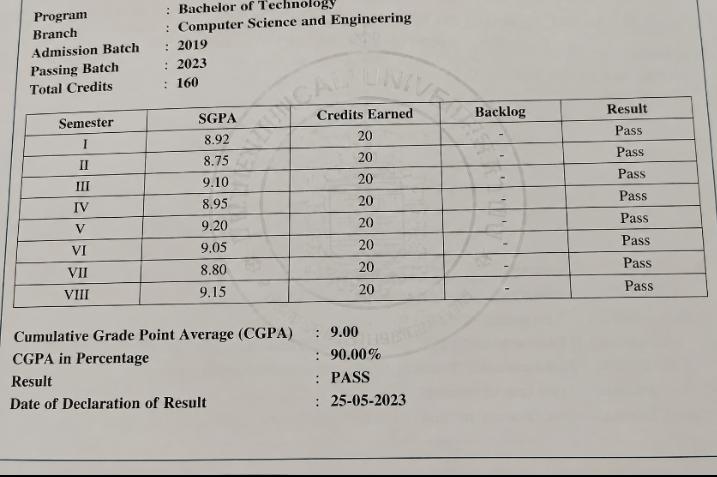
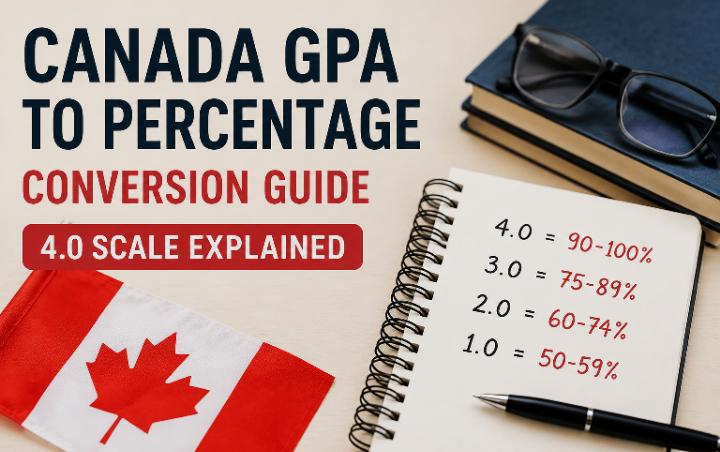
India's 10-point CGPA, UK degree classifications, and percentage-based scales each follow entirely different logic. A 9.0 CGPA from an Indian university, a First-Class Honours from a UK institution, and an 85% score from a Canadian program can all represent outstanding academic performance, yet without conversion, they're incomparable.
If you're converting grades from India, my How to Convert 10 CGPA to Percentage in Every Indian University explains the official formulas used by different universities before you calculate your GPA.
The standard formula (GPA = CGPA ÷ 10 × 4) gives a quick approximation, but experts note it often overstates performance for systems where a 9.0+ is significantly harder to achieve than a US 90%.
What US admissions officers actually see when they review your transcript
Admissions teams at universities in New York, Los Angeles, and Chicago rely on converted GPA figures to filter and rank applicants. Using a rounded or oversimplified conversion can misrepresent a genuinely strong record.
A gpa calculator for international students that applies the more precise modified formula, GPA = (CGPA - 0.75) × 4 ÷ 9.25, produces a result closer to what World Education Services recommends for accurate credential evaluation.
How to Use a GPA Calculator for International Students Step by Step
This gpa calculator for international students lets you convert grades from dozens of global systems into the standard U.S. 4.0 scale instantly, giving you a reliable estimate before you submit a single application. The process takes under two minutes.
However, the details matter more than most students realize, one rounded digit can quietly disqualify you from a merit scholarship.

Step 1 and 2, Identify your grading scale and choose the target system
Pull out your official transcript before touching any calculator. Confirm which scale your institution uses: a 10-point CGPA (common across India and Bangladesh), a percentage scale, a 5-point GPA, or a UK degree classification.
These are not interchangeable, and entering the wrong base scale produces a completely meaningless result. Once confirmed, select the target system your destination university requires, almost universally, U.S. programs expect a 4.0 scale, which the WES iGPA Calculator uses as its primary output standard.
Step 3, Enter your exact CGPA value and interpret your result
Enter your unrounded CGPA exactly as it appears on your transcript. Never approximate.
The standard formula, GPA = (CGPA ÷ 10) × 4, converts an 8.5 CGPA to a 3.4 GPA. For Indian transcripts specifically, though, the modified formula GPA = (CGPA − 0.75) × 4 ÷ 9.25 lands closer to a common GPA.
That gap between 3.4 and 3.35 isn't cosmetic: it can determine scholarship eligibility at competitive graduate programs.
Here's a quick reference for the standard conversion benchmarks: Always treat the result as an informed estimate, not a final verdict.
- CGPA 10 = GPA 4.0
- CGPA 9 = GPA 3.6
- CGPA 8 = GPA 3.2
- CGPA 7 = GPA 2.8
- CGPA 6 = GPA 2.4
No official universal conversion standard exists, so the target institution when it comes down to it decides how it reads your transcript. Use your calculated GPA as a planning benchmark, then confirm directly with the admissions office before submitting.
Use your calculated GPA as a planning benchmark, then confirm directly with the admissions office before submitting.
The Most Common Conversion Formulas You Need to Know
Most students assume one formula covers every grading system. Wrong.
There are at least three distinct methods in active use, and choosing the wrong one can shift your result by a meaningful margin. A reliable gpa calculator for international students applies the right formula automatically, but knowing the math yourself lets you verify every result before it reaches an admissions office.
CGPA to US GPA: Standard and Precision Formulas Compared
The standard linear method is simple: GPA = (CGPA ÷ 10) × 4. It produces clean benchmarks: CGPA 9 yields 3.6, CGPA 8 yields 3.2, CGPA 7 yields 2.8.
But precision matters at competitive programs. The modified formula for Indian transcripts, GPA = (CGPA − 0.75) × 4 ÷ 9.25.
Returns roughly 3.35 for an 8.5 CGPA rather than 3.4. That 0.05 gap looks minor.
For merit scholarship thresholds, it can be decisive. According to World Education Services, the more conservative result tends to align better with how US admissions offices read Indian transcripts. Newer converters are shifting toward these curvilinear formulas precisely because linear scaling overstates performance at the top end.
Percentage to GPA and UK Degree Classification Conversions
For percentage-based systems, the formula is GPA = (Percentage − 60) × 4 ÷ 40, which assumes 60% is the baseline for a 2.0 GPA. Which assumes 60% equals a 2.0 (C grade) in the US context.
An 80% score then gives you: (80 − 60) × 4 ÷ 40 = 2.0. UK First-Class graduates scoring 70% or above typically fall within a US GPA range of 3.7-4.0.
If your qualification comes from the UK, read my UK Degree Classification to GPA: The Complete Conversion Guide for a more detailed comparison.
- Standard: CGPA 10 = 4.0, CGPA 9 = 3.6, CGPA 8 = 3.2
- Precision (India): GPA = (CGPA − 0.75) × 4 ÷ 9.25
- Percentage scale: GPA = (Percentage − 60) × 4 ÷ 40
- CGPA to percentage: Percentage = CGPA × 9.5
For quick reverse checks, the formula Percentage = CGPA × 9.5 holds up reliably: an 8.5 CGPA converts to roughly 80.75%. Cgpaglobal.cloud tip: Always enter your exact, unrounded CGPA from your official transcript. Rounding a 8.47 up to 8.5 before calculating skews your output and may not match what the admissions committee sees when they verify your credentials directly.
What GPA Conversion Tools Won't Tell You, Industry Secrets Revealed
Every gpa calculator for international students carries a secret buried in its fine print: the output is always an approximation, never an official figure. No conversion result carries institutional authority.
Universities maintain their own internal grade equivalency tables, and those tables frequently diverge from whatever formula a public calculator applies. Submitting a calculator result as if it were verified fact is a risk most applicants don't realize they're taking until an admissions decision arrives.

The hidden limitations most calculators quietly ignore
The same CGPA can produce meaningfully different GPA values depending on which formula a specific institution applies. A CGPA of 9.0 yields 3.6 under the standard linear formula, but applying the modified approach used by some admissions offices produces a more conservative figure.
Older tools still rely on straightforward linear scaling that ignores institutional grading rigor entirely, which can overestimate your GPA compared to what a university admissions office would calculate using its own verified methodology.
How top applicants use precision to gain a competitive edge
The difference between 3.4 and 3.34 isn't cosmetic. That gap can determine whether an applicant clears a scholarship cut-off or falls just below it.
Serious applicants follow a disciplined three-step process before submitting any figure.
- Confirm your exact grading scale directly from your official transcript, never from memory
- Identify the specific conversion policy published by your destination university
- Enter the unrounded CGPA value, then cross-check the result against the WES iGPA Calculator, the primary tool endorsed by World Education Services for US admissions
Treating a calculator result as a starting point rather than a final answer is what separates well-prepared applicants from those caught off guard during verification. Cross-checking takes minutes and guards against the single most common error in international applications.
How cgpaglobal.cloud Supports International Students Across 50+ Countries
This GPA calculator for international students lets you instantly convert grades from over 50 global grading systems into the standard U. S. 4.0 scale, giving you a solid estimate before submitting any graduate school application. No subscription, no paywall, no hidden fees. Cgpaglobal.cloud is completely free, supported by advertising, so every student worldwide gets the same access regardless of budget.

Free tools designed for every major grading system worldwide
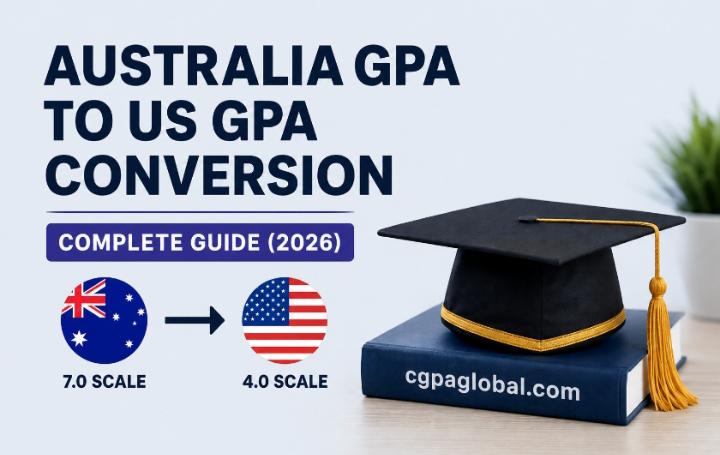
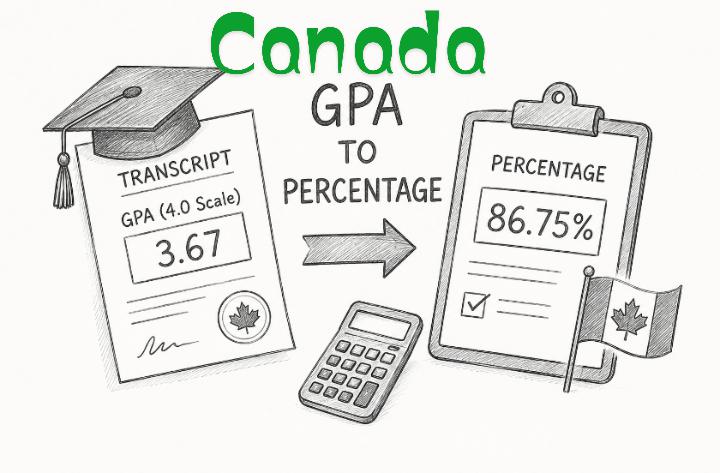
The platform covers the grading systems that trip students up most: India's 10-point CGPA. UK degree classifications, Canadian scales, UAE frameworks, and the U. S. 4.0 system itself. The free toolkit includes a CGPA to Percentage Converter, a CGPA to US GPA Calculator. A UK Degree Classification Guide, International Grade Comparison Tables, Scholarship Application Resources, and Study Abroad Guides.
Who uses cgpaglobal.cloud and what they can achieve with it
Four distinct groups rely on the platform daily: university students checking their own standing. Prospective international applicants preparing submissions, professionals evaluating foreign credentials, and university admissions teams processing overseas transcripts. Each group gets the same precision tools, per World Education Services' iGPA methodology.
Consider a real-world scenario: an Indian student runs both the standard formula (CGPA ÷ 10 × 4) and the precision formula ((CGPA - 0.75) × 4 ÷ 9.25), then compares results before submitting. That six-point difference matters for scholarship thresholds.
Knowing it in advance is the entire point.
Frequently Asked Questions
How do I convert my CGPA from India to a US GPA?
The most common method divides your CGPA by your institution's maximum scale, then multiplies by 4.0. So an 8.5 CGPA on a 10-point scale becomes roughly 3.4 on the US GPA scale.
That said, many US universities and credential evaluators use their own conversion formulas, so results can vary. The CGPA to US GPA Conversion Calculator on this website "cgpaglobal.cloud" walks you through this automatically, accounting for the scale your institution uses.
Is there a free GPA calculator for international students?
Yes. Cgpaglobal.cloud offers a completely free CGPA and GPA conversion tool, no registration needed. It covers grading systems from over 50 countries, so whether you studied in India.
Nigeria, Germany, or the Philippines, you can get a reliable conversion in seconds. The platform runs on advertising, which is what keeps every tool free for students.
What GPA is equivalent to a first-class degree in the UK?
A UK first-class honours degree typically maps to a US GPA of 3.7 to 4.0.
Though the exact conversion depends on which framework an institution uses. On a 10-point CGPA scale, a first-class equivalent usually falls at 8.5 or above. Cgpaglobal.cloud's UK Degree Classification Guide breaks down each classification tier with the corresponding GPA ranges.
How accurate are online GPA conversion calculators?
Honest answer: they vary significantly. A good calculator is accurate for standardized comparisons, but no automated tool can perfectly replicate what a university admissions office or a credential evaluator like World Education Services (WES) will do when they assess your transcripts manually.
Where online calculators genuinely help is in giving you a credible, defensible starting point before you apply. I've seen students use conversion results to self-screen for scholarship eligibility thresholds, which saves real time.
Use the tool for orientation, then confirm with the institution if the stakes are high.
Do US universities accept CGPA directly or do I need to convert it?
Most US universities will accept your original CGPA transcript, but they typically convert it internally using their own scale. You rarely need to do the conversion yourself before applying.
That said, some scholarship applications and eligibility screeners explicitly ask for a 4.0-scale GPA. In those cases, having a pre-calculated conversion ready, backed by a recognized methodology, strengthens your application and avoids delays during review.
What is the difference between CGPA and GPA?
GPA, or Grade Point Average, measures your performance in a single semester or term. CGPA, the Cumulative Grade Point Average, averages your scores across all completed semesters, painting a fuller picture of academic consistency over time.
The US system typically runs GPA on a 4.0 scale. Many South Asian and African universities use CGPA on a 10-point scale.
Neither is inherently superior, they simply reflect different national conventions, which is exactly why conversion tools exist.
Your GPA Calculator for International Students Is the First Step Admissions Officers Never See You Take
The students who get this right don't just submit better applications, they walk into the process knowing exactly where they stand, before anyone else decides for them.
Pull up your transcripts right now. Run your grades through a gpa calculator for international students at cgpaglobal.cloud, it takes under two minutes and covers conversion systems for over 50 countries.
Cgpaglobal.cloud is completely free, no account required. Whether you're converting a 7.8 CGPA from an Indian university or a German 1.3 into a US GPA, the tools are built specifically for the complexity international transcripts carry.
Be the first to comment on this guide.
Leave a Comment
Comments are reviewed before appearing. Your email is never published.